

2026 14th International Conference on Smart Energy Grid Engineering was held at Ontario Tech University, Oshawa, Canada in hybrid with virtual style successfully during August 19-21. Most participants attended onsite conference while the rest chose virtual conference for personal reasons. We'd like to express our thanks for the online participation of all the presenters, speakers and honorable guests.
Conference Program
Download the full verision of the program
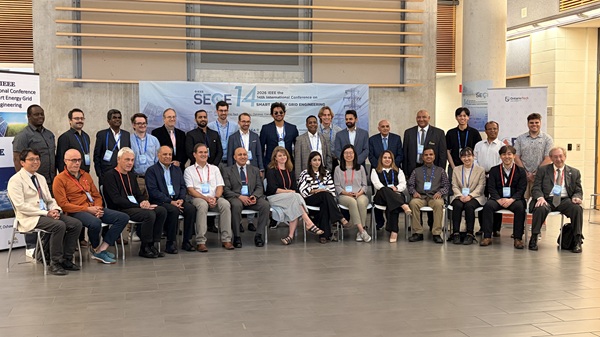
Best Presentation Award 2026
Best Paper Awards:
Session 1
SG055-A
Title: Design and Development of a Graphene/FeS2 Composite Anode for High-Performance Sodium-ion Batteries
Author(s): Mohammad H. Entezari and Sara Ramandi
SG094
Title: The Role of Energy Storage Systems in Enabling a Sustainable Hydrogen Economy: Opportunities, Challenges, and Global Perspectives
Author(s): Suresh Vishwakarma and Ruchi Tyagi
Session 2
SG101
Title: Automated Energy-Temperature Sensitivity Analysis and Baseload Estimation Using Piecewise Change-Point Regression in Commercial Buildings
Author(s): Farshad Etedadi, Seyedsaeid Hosseini, Karine Lavigne, Marc-André Richard and José Luis Suarez
Session 3
SG024
Title: An Electric Vehicle Measurement System to Investigate the Pause and Resume Behavior of Electric Vehicle Charging
Author(s): Sebastian Beichter, Alexander Stein, Marius Dettki, Friedrich Wiegel, Richard Jumar, Simon Waczowicz, Marc Hiller and Veit Hagenmeyer
Session 4
SG061
Title: Machine Learning-Based Intrusion Detection for Cyber-Physical Security of Digital Substations Using Multi-Layer IEC-61850 Features
Author(s): Ahmed Abdelmoety and Mohamed Zayed
The Winners on Sustainability:
Research Innovation in Energy and Sustainability
Sponsored by MDPI – Sustainability Journal.

Author(s): Akhtar Hussain, Tristan Morin and Innocent Kamwa
Author(s): Muhammad Saad Iqbal, Hamza Aagela, Nigel Schofield, Xingyu Liu, Yiheng Hu and Youssif Ahmed Student Innovation Competition Awards
Keynote Speaker I
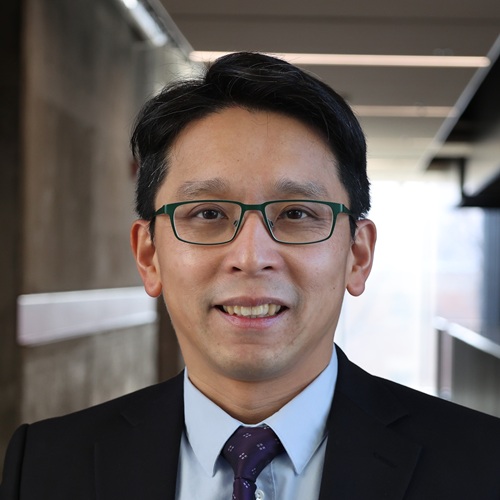
Dr. Carl Ho
University of Manitoba, Canada
Dr. Carl Ho received his B.Eng., M.Eng., and Ph.D. degrees in Electronic Engineering from the City University of Hong Kong. He has held prominent roles in both industry and academia, including serving as a Principal Scientist at ABB Switzerland and as a Canada Research Chair at the University of Manitoba. He is currently a Professor and Associate Head in the Department of Electrical and Computer Engineering at the University of Manitoba, and he is a Registered Professional Engineer in the Province of Manitoba. Dr. Ho’s research covers several cutting edge areas, including microgrid technologies, renewable energy systems, real time digital simulation, heavy duty electric vehicles (EVs), and applications of wide bandgap (WBG) power semiconductors.
Speech Title: Development of Wireless Electric Vehicle Chargers
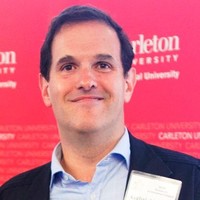
Dr. Gabriel A. Wainer
Carleton University, Canada
Gabriel Wainer, FSCS, is a Professor in the Department of Systems and Computer Engineering at Carleton University. He is the founder of the ARS Lab and a leading researcher in Modeling and Simulation, DEVS formalism, real-time simulation, and digital twins. He has authored hundreds of publications and serves as Editor-in-Chief of SIMULATION and on multiple editorial boards. His awards include the IBM Eclipse Innovation Award, the SCS Leadership Award, IEEE Ottawa Outstanding Engineering Award, and others. He is an ACM Distinguished Speaker and Fellow of SCS.
Speech Title: Digital Quadruplets and Sustainable Smart Energy Systems: A DEVS-based Framework for the Future Grid
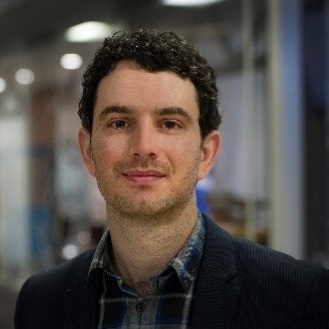
Dr. Kevin Pope
Memorial University of Newfoundland, Canada
Dr. Kevin Pope is a Professor of Mechanical Engineering at Memorial University of Newfoundland, Canada, with nearly 20 years of research experience in sustainable energy systems, specializing in wind power and clean hydrogen. An expert in thermo-fluids and renewable energy, he has published over 140 journal and conference papers and 4 book chapters internationally. Dr. Pope received the Canadian Society for Mechanical Engineering's (CSME) I.W. Smith award for outstanding achievement in creative mechanical engineering and led program development of the university's Master of Applied Science in Energy Systems Engineering.
Speech Title: Resiliency in Utility-Scale Wind-to-Hydrogen Systems
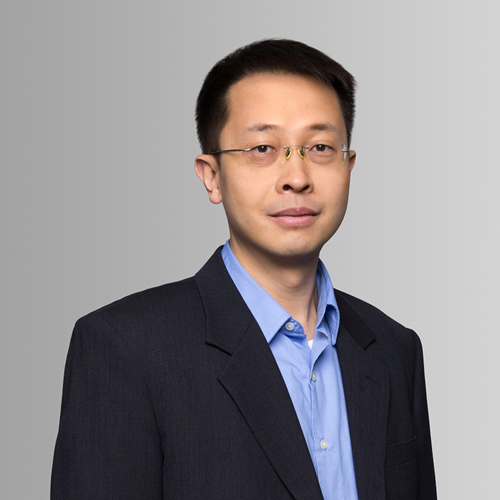
Assoc. Prof. Philip W. T. Pong
New Jersey Institute of Technology, United States
Philip W. T. Pong received a B.Eng. from the University of Hong Kong (HKU) with 1st class honours. Then he obtained a PhD in engineering at the University of Cambridge. He was a postdoctoral researcher at the Magnetic Materials Group at the National Institute of Standards and Technology (NIST). Currently he is an Associate Professor in the Department of Electrical and Computer Engineering at New Jersey Institute of Technology (NJIT). His research interest focuses on the fault detection, predictive maintenance, and anomaly detection of power grid. He is the Founding Director of the Power Systems Engineering Center, Green Technology Research and Training Laboratory, and Sensor Research Laboratory, leading the research and education activities of power engineering at NJIT. Philip Pong is a Fellow of the Institution of Engineering and Technology (FIET), a Fellow of the Institute of Physics (FInstP), a Fellow of the Energy Institute (FEI), a Fellow of the Institute of Materials, Minerals and Mining (FIMMM), a Fellow of the Hong Kong Institution of Engineers (FHKIE), a chartered physicist (CPhys), a chartered engineer (CEng), a chartered energy engineer, a registered professional engineer (R.P.E. in Electrical, Electronics, Energy), and a Senior Member of IEEE (SMIEEE). He serves on the editorial boards for several IEEE and SCI journals. Recently he received the IEEE Power and Energy Society North Jersey Chapter – Outstanding Power Engineer Award, NJIT Nexus of Excellence Award – Excellence in Graduate Instruction, and NJIT Newark College of Engineering – Excellence in Teaching Award.
Speech Title: Contactless Magnetic Sensing in Condition Monitoring and Anomaly Detection for Smart Grid: New Possibilities and Alternatives
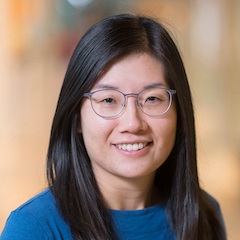
Dr. Christine Chen
The University of British Columbia, Canada
Christine Chen is an Associate Professor with the Department of Electrical and Computer Engineering and an Associate Director of the Clean Energy Research Centre at The University of British Columbia. Her research interests include power system modelling, control, and operation. She received the B.A.Sc. degree in engineering science from the University of Toronto in 2009, and the M.S. and Ph.D. degrees in electrical engineering from the University of Illinois at Urbana-Champaign in 2011 and 2014, respectively. Her work has been recognized with a Best Paper Award from the IEEE Transactions on Energy Conversion in 2018, a “Best of the Best” Prize Conference Paper Award at the IEEE Power and Energy Society General Meeting in 2022, and a Best Paper Award Finalist at the IEEE Innovative Smart Grid Technologies Conference North America in 2024. She also co-authored the 2021 IEEE Power and Energy Society Prize Paper. Christine has served on the editorial boards of the IEEE Transactions on Power Systems, IEEE Transactions on Energy Conversion, and IEEE PES Letters.
Speech Title: Local Electricity Markets with Prosumer Preferences for Community Energy Systems
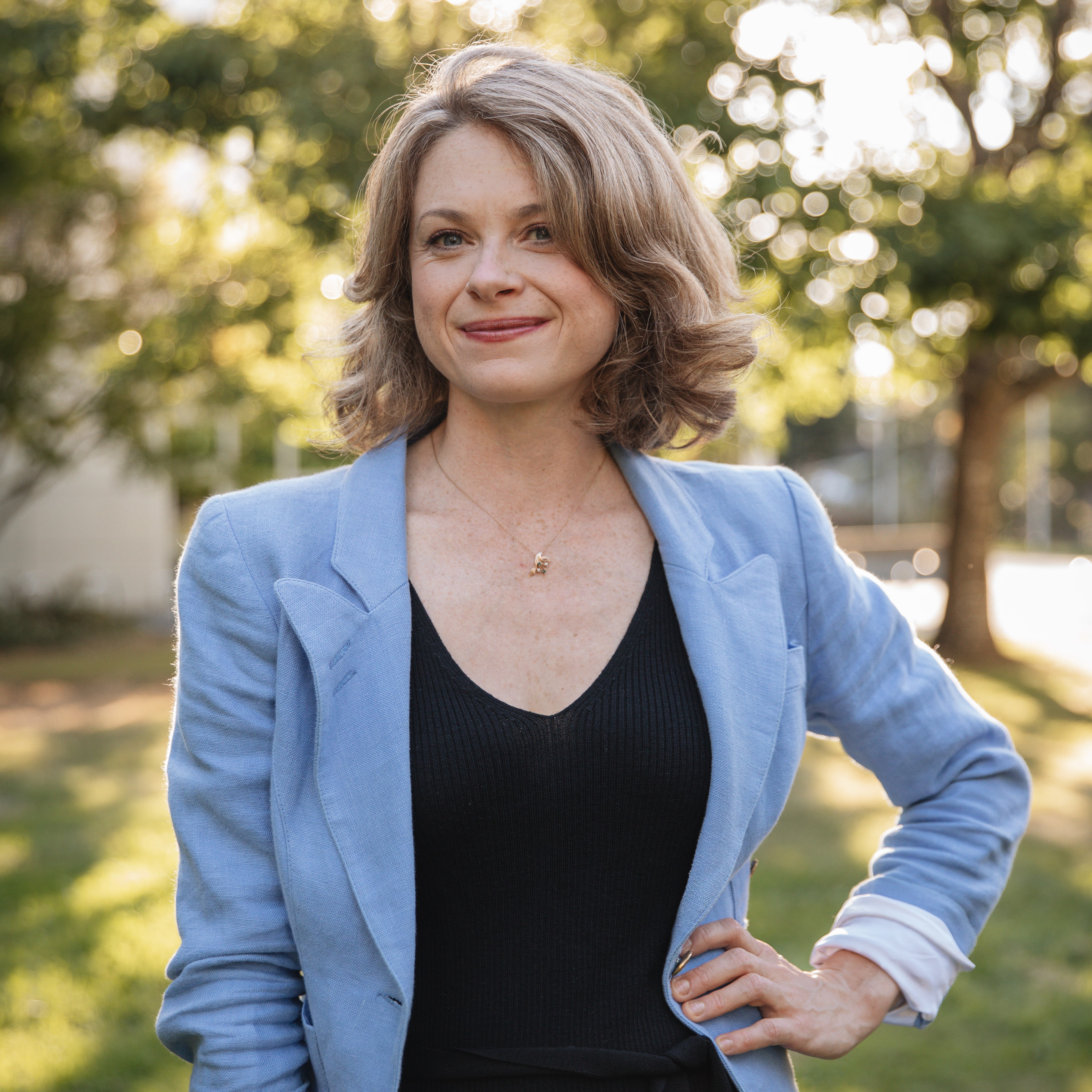
Dr. Madeleine McPherson
University of Victoria, Canada
Dr. Madeleine McPherson is an Associate Professor in the department of Civil Engineering and the Associate Director of the Institute for Integrated Energy Systems at the University of Victoria. As the principal investigator of the Sustainable Energy Systems Integration & Transitions (SESIT) Group, Dr. McPherson and her team have developed an integrated suite of models to explore the evolution of our energy system. Her team applies those models in collaboration with governments, civil society, Indigenous rights holders, and industry to co-create decarbonization pathways. Dr. McPherson is a co-founder and co-director of the Energy Modelling Hub, which is convening a national dialogue between modelers, policymakers and stakeholders around Canada’s energy system.